

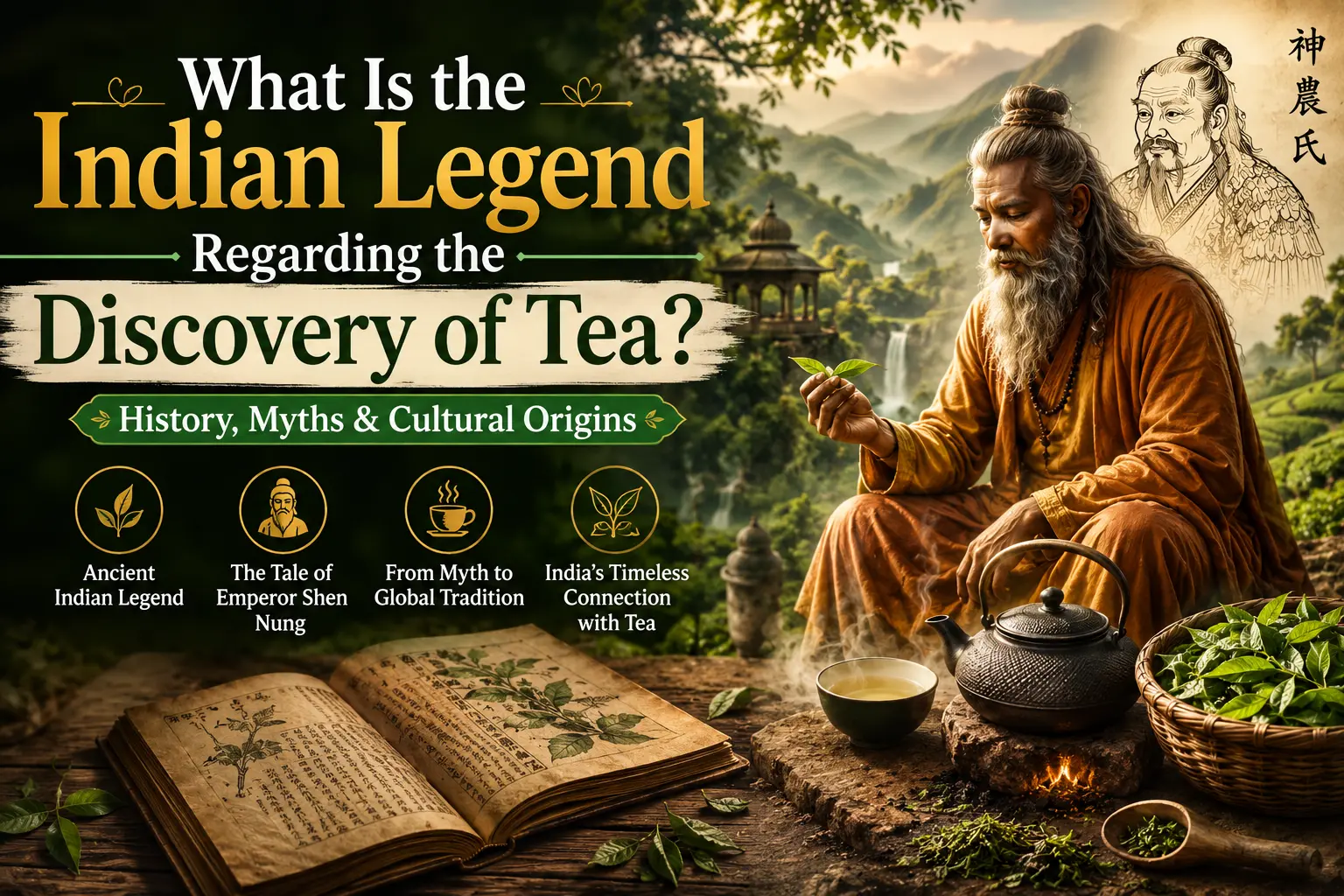
Tea is one of the most consumed beverages in the world, with billions of cups enjoyed every day. In India, tea is more than just a drink—it is a cultural symbol, a social tradition, and an important part of daily life. From roadside tea stalls to family gatherings, tea plays a central role in Indian society.
Many people ask, what is the indian legend regarding the discovery of tea because stories surrounding tea’s origins are fascinating and deeply connected to ancient traditions. While historical records provide evidence about the spread and cultivation of tea, legends offer a glimpse into how different cultures explain its discovery.
This article explores the Indian legend associated with tea, examines the historical background of tea in India, compares myths from neighboring regions, and explains how tea became a defining feature of Indian culture.
Understanding Tea’s Ancient Origins
Before exploring Indian legends, it is important to understand where tea is believed to have originated.
Most historians agree that tea plants originated in regions stretching across present-day China, northeastern India, Myanmar, and parts of Southeast Asia. The tea plant, scientifically known as Camellia sinensis, has grown naturally in these areas for thousands of years.
Modern botanical research indicates that wild tea varieties existed in Assam long before commercial cultivation began. Indigenous communities living in northeastern India were familiar with tea leaves and consumed them in various forms centuries before British colonial plantations transformed tea into a global commodity.
Today, India is among the world’s largest tea producers. According to data from the Indian Tea Board and industry reports, India produces over 1.3 billion kilograms of tea annually, contributing significantly to global tea consumption and exports.
The Famous Indian Legend Behind Tea
When discussing what is the indian legend regarding the discovery of tea, one of the most widely shared stories is linked to Buddhist traditions and the monk Bodhidharma.
The Story of Bodhidharma
According to legend, Bodhidharma was a Buddhist monk who traveled from India to China during the 5th or 6th century CE. He is traditionally credited with introducing Zen Buddhism to China.
The story states that Bodhidharma vowed to meditate continuously for many years. During his long meditation sessions, he became exhausted and struggled to stay awake. Frustrated by his drowsiness, he is said to have cut off his eyelids and thrown them to the ground.
From the spot where the eyelids landed, tea plants miraculously grew. The leaves from these plants were later discovered to possess stimulating properties that helped monks remain alert during meditation.
As the legend spread across Asia, tea became associated with mindfulness, concentration, and spiritual practice.
Symbolic Meaning of the Legend
Rather than being a literal historical account, scholars generally view this story as symbolic.
The legend highlights several themes:
- Dedication to spiritual discipline
- Overcoming physical limitations
- The pursuit of enlightenment
- The connection between tea and mental alertness
The story also explains why tea became closely linked with Buddhist monasteries and meditation traditions throughout Asia.
Is the Bodhidharma Story Historically Accurate?
Most historians do not consider the Bodhidharma legend to be factual history.
There is no archaeological or documentary evidence supporting the claim that tea plants emerged from Bodhidharma’s eyelids. Instead, the legend appears to have developed centuries after tea was already known and consumed in Asia.
However, legends often serve a cultural purpose beyond historical accuracy. They help communities preserve values, beliefs, and traditions in memorable ways.
Even though the story is mythical, it remains one of the most famous explanations associated with tea’s discovery.
Indigenous Tea Traditions in India
To understand what is the indian legend regarding the discovery of tea, it is also important to recognize India’s own indigenous tea history.
Long before large-scale commercial tea cultivation, tribal communities in northeastern India used tea plants in everyday life.
Assam’s Indigenous Knowledge
The Singpho tribe of Assam is frequently cited as one of the earliest groups known to use tea leaves.
Historical accounts suggest that the Singpho people:
- Consumed tea as a beverage
- Smoked tea leaves in some cases
- Fermented tea for preservation
- Used tea in social and cultural practices
When British explorers entered Assam during the early nineteenth century, they encountered native tea plants growing naturally in the region.
This discovery eventually led to the development of India’s massive tea industry.
Local Traditions and Oral Histories
Many northeastern communities maintain oral traditions explaining how their ancestors discovered the beneficial properties of tea plants.
Although these stories vary by region, they often emphasize:
- Observation of nature
- Traditional herbal knowledge
- Community wisdom
- Long-standing interaction with local plants
These traditions form an important part of India’s tea heritage.
The Chinese Legend of Emperor Shen Nong
No discussion about tea discovery would be complete without mentioning the famous Chinese legend.
According to traditional Chinese accounts, tea was discovered in 2737 BCE by Emperor Shen Nong.
The Story
The legend states that Shen Nong was boiling water outdoors when leaves from a nearby tea plant drifted into his pot.
Curious about the resulting aroma, he tasted the infusion and found it refreshing and invigorating.
This accidental discovery supposedly marked the beginning of tea drinking.
Historical Significance
While historians cannot verify the story, it remains one of the most influential tea legends in the world.
The Shen Nong narrative demonstrates how different cultures developed unique explanations for tea’s origins.
Tea and Spiritual Practice in Ancient India
Tea’s association with spirituality extends beyond legends.
Many herbal infusions have historically played roles in Indian religious and wellness traditions.
Although modern chai differs significantly from ancient herbal beverages, the idea of using plant-based drinks for health and mental clarity has deep roots in Indian culture.
Buddhist monks, Hindu ascetics, and traditional healers often consumed herbal preparations to support meditation, focus, and overall well-being.
The Bodhidharma legend likely emerged within this broader context of spiritual discipline and botanical knowledge.
The Arrival of Commercial Tea Cultivation
A major turning point in Indian tea history occurred during British colonial rule.
Discovery of Assam Tea
In the early nineteenth century, British officials discovered extensive tea-growing regions in Assam.
Botanists confirmed that these plants belonged to a variety of Camellia sinensis suitable for commercial cultivation.
This finding challenged the belief that quality tea could only be produced in China.
Expansion of Plantations
Throughout the 1800s, tea plantations expanded rapidly across:
- Assam
- Darjeeling
- Nilgiri Hills
- Kangra Valley
These regions eventually became some of the world’s most famous tea-producing areas.
Today, Indian teas are recognized globally for their unique flavors and quality.
Why Tea Became Central to Indian Culture
India’s relationship with tea extends far beyond agriculture.
Economic Importance
Tea is one of India’s most significant agricultural industries.
Industry estimates indicate that millions of people are employed directly or indirectly in tea cultivation, processing, transportation, and retail.
Tea exports contribute substantially to India’s agricultural economy.
Social Importance
Tea serves as a universal social beverage across India.
Whether in urban cafés or rural villages, tea often accompanies:
- Family discussions
- Business meetings
- Celebrations
- Travel breaks
- Community gatherings
The phrase “chai pe charcha” reflects tea’s role in conversation and social bonding.
Everyday Accessibility
Unlike many luxury beverages, tea remains affordable and accessible to people from diverse economic backgrounds.
This accessibility has helped tea become a truly national drink.
The Science Behind Tea’s Alertness Effects
The Bodhidharma legend links tea to staying awake during meditation.
Modern science provides an interesting explanation for why such stories may have emerged.
Tea contains naturally occurring compounds including:
Caffeine
Caffeine stimulates the central nervous system and helps improve alertness.
L-Theanine
L-theanine is an amino acid found almost exclusively in tea.
Research suggests it may promote relaxation while maintaining mental focus.
Antioxidants
Tea contains polyphenols and catechins that contribute to overall health benefits.
These compounds may help explain why tea became associated with concentration and sustained attention.
Tea in Modern India
India’s tea culture continues to evolve.
Popular varieties include:
Assam Tea
Known for its bold flavor and strong body.
Darjeeling Tea
Often called the “Champagne of Teas” because of its delicate aroma and unique character.
Nilgiri Tea
Valued for its smooth taste and fragrant profile.
Masala Chai
Perhaps India’s most famous tea preparation, combining black tea with spices such as:
- Cardamom
- Ginger
- Cinnamon
- Cloves
- Black pepper
Masala chai has become an international symbol of Indian hospitality and culinary tradition.
Why Tea Legends Continue to Matter
Legends surrounding tea remain popular because they connect people to cultural heritage.
Stories like Bodhidharma’s provide:
- Historical identity
- Spiritual symbolism
- Educational value
- Cultural continuity
Even when not historically verifiable, these narratives help explain why tea occupies such a meaningful place in society.
For many people, tea is more than a beverage—it represents tradition, mindfulness, community, and shared history.
Frequently Asked Questions
What is the Indian legend regarding the discovery of tea?
The most widely known Indian legend involves Bodhidharma, a Buddhist monk who allegedly threw away his eyelids during meditation, causing tea plants to grow from the ground where they fell.
Did Bodhidharma really discover tea?
There is no historical evidence proving Bodhidharma discovered tea. Most scholars regard the story as a symbolic religious legend rather than a factual account.
Where was tea actually discovered?
Tea likely originated in regions spanning China, northeastern India, Myanmar, and Southeast Asia. Historical evidence suggests tea plants existed naturally in these areas for thousands of years.
Did Indians use tea before British rule?
Yes. Indigenous communities, particularly in Assam, were familiar with tea plants and consumed tea long before commercial cultivation began under British colonial administration.
Why is tea associated with meditation?
Tea contains caffeine and L-theanine, compounds that can improve alertness and focus. These properties made tea popular among Buddhist monks and contributed to legends linking tea with meditation.
Conclusion
When exploring what is the indian legend regarding the discovery of tea, the story of Bodhidharma stands out as the most influential narrative. According to legend, tea plants emerged from the monk’s discarded eyelids, symbolizing perseverance, awareness, and spiritual dedication.
Although historians view this account as mythology rather than documented history, it remains a powerful cultural story that reflects tea’s longstanding connection to mindfulness and human experience. At the same time, archaeological evidence and historical records show that indigenous communities in northeastern India had knowledge of tea plants long before commercial cultivation transformed tea into a global industry.
Today, tea continues to unite history, culture, agriculture, and daily life. Whether enjoyed as a simple cup of chai or appreciated through ancient legends, tea remains one of humanity’s most cherished beverages and an enduring symbol of India’s rich heritage.
Read More Guide’s
Serumcu Explained: Benefits, Skincare Trends, Industry Growth & Future Outlook
CireliusShop Explained: Renewable Energy Solutions, HVAC Products & Industry Insights
