

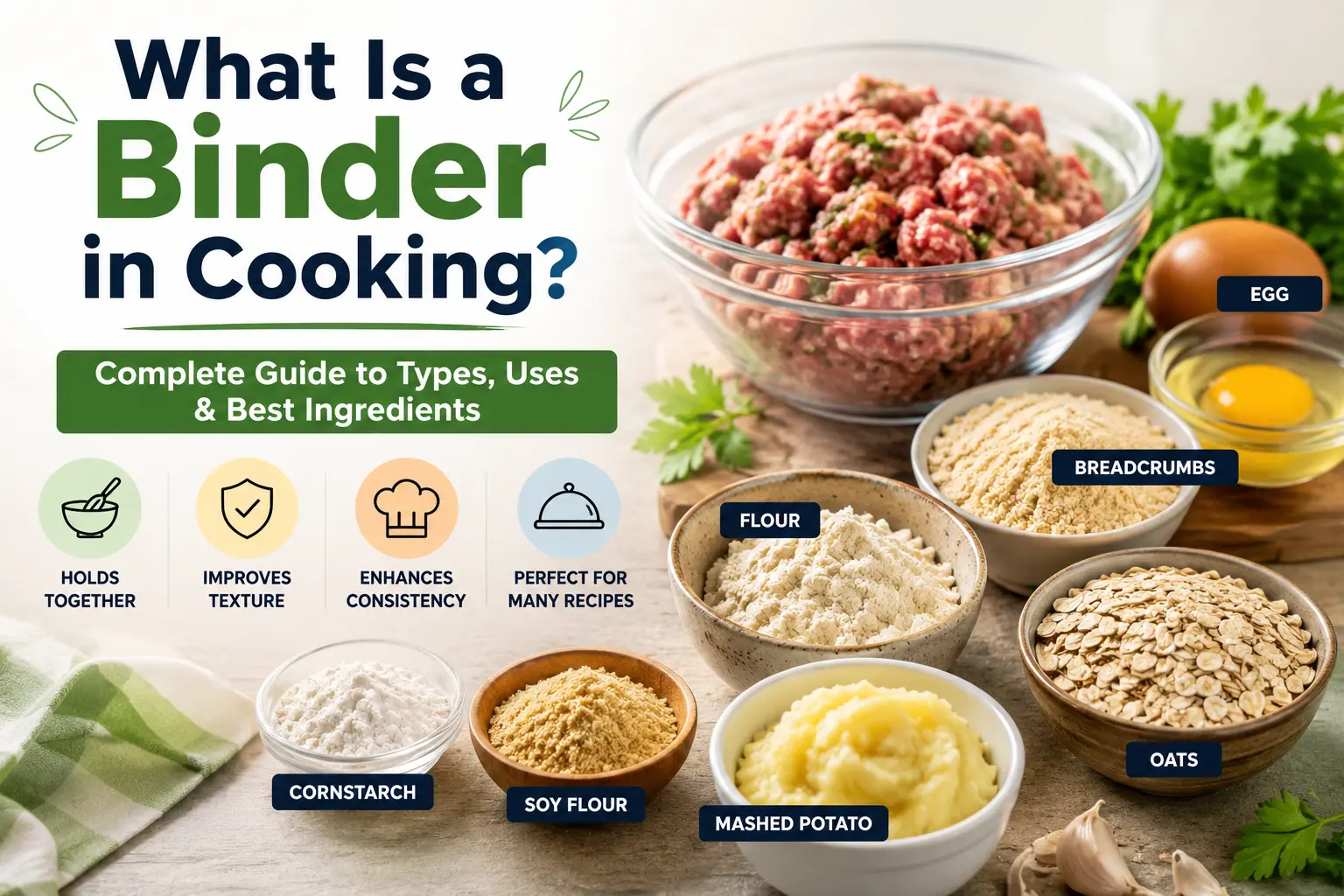
Cooking is both an art and a science. Behind every perfectly shaped meatball, crispy veggie patty, moist cake, or creamy sauce lies an important culinary principle: binding ingredients together. Many home cooks hear the term but still wonder, what is a binder in cooking and why it matters so much in food preparation.
A binder is an ingredient used to hold food mixtures together, improve texture, and prevent ingredients from separating during cooking. Without proper binders, dishes can crumble, break apart, or lose their desired consistency. From eggs in meatloaf to flour in sauces and breadcrumbs in burgers, binders play a major role in kitchens around the world.
In modern cooking, binders are also important for gluten-free recipes, vegan meals, plant-based foods, and industrial food production. Understanding how they work can dramatically improve cooking results whether you are a beginner or an experienced chef.
This guide explains everything you need to know about cooking binders, including common types, how they function, examples from real-world cuisine, and tips for choosing the right binder for different recipes.
Understanding the Role of a Binder in Food
To fully understand what is a binder in cooking, it helps to look at how ingredients behave during preparation and heating.
Many foods naturally separate because they contain varying amounts of water, fat, proteins, or starches. A binder acts like culinary glue, helping these ingredients stay connected during mixing, shaping, baking, frying, or grilling.
For example:
- Ground beef alone may fall apart when cooked into patties
- Cake batter can collapse without proper structural ingredients
- Sauces may separate into oil and liquid
- Vegetable fritters can crumble during frying
Binders solve these problems by stabilizing the structure of food.
Professional chefs and food scientists often classify binders into several categories:
- Protein-based binders
- Starch-based binders
- Gel-based binders
- Fat-based emulsifiers
- Plant-based alternatives
Each type works differently depending on the recipe and cooking method.
How Binders Work Scientifically
Food binding relies on chemistry and physical interactions between ingredients.
When heated, proteins such as eggs coagulate and create a network that traps moisture and particles. Starches absorb water and swell, thickening mixtures and helping them stay intact. Gelatin and gums create elastic structures that stabilize liquids and solids.
This process is especially important in:
- Baking
- Meat preparation
- Sauce making
- Frozen foods
- Plant-based cooking
- Processed foods
Food manufacturers spend millions of dollars researching stabilizers and binders because texture strongly affects customer satisfaction.
According to food science studies from institutions such as the United States Department of Agriculture and various culinary institutes, texture is one of the top factors influencing food quality perception among consumers.
Common Types of Binders Used in Cooking
Eggs
Eggs are among the most widely used binders in the culinary world. They contain proteins that solidify during cooking and help ingredients hold together.
Common Uses
- Meatballs
- Meatloaf
- Cakes
- Cookies
- Pancakes
- Casseroles
Eggs also contribute moisture, flavor, and richness.
One egg can significantly improve the structure of baked goods while preventing crumbly textures in savory dishes.
Breadcrumbs
Breadcrumbs absorb moisture and create structure in mixtures. They are commonly paired with eggs in recipes like burgers and meatballs.
Advantages
- Improve texture
- Reduce dryness
- Help retain shape
- Add slight crispiness
Panko breadcrumbs, traditional breadcrumbs, and cracker crumbs are all popular options.
Flour
Flour is another classic binder. Wheat flour contains gluten proteins that develop elasticity when mixed with water.
Common Applications
- Sauces
- Gravies
- Dough
- Coatings
- Batters
Flour-based roux is a foundational technique in French cuisine used for thickening soups and sauces.
Cornstarch
Cornstarch is widely used in Asian cuisine and commercial food production.
Benefits
- Thickens liquids quickly
- Creates glossy sauces
- Improves crisp textures
- Works well in frying
Because cornstarch is gluten-free, it is often used in recipes for people with gluten sensitivities.
Gelatin
Gelatin is derived from collagen and forms a gel-like structure when cooled.
Used In
- Desserts
- Marshmallows
- Gummies
- Aspics
- Mousses
It creates a smooth, firm texture and stabilizes liquids effectively.
Cheese
Certain cheeses can function as binders due to their fat and protein content.
Examples
- Parmesan in meatballs
- Mozzarella in casseroles
- Cream cheese in dips
Melted cheese helps ingredients adhere together while adding flavor.
Potato Starch and Mashed Potatoes
Potato products are excellent natural binders.
Frequently Used In
- Croquettes
- Veggie burgers
- Dumplings
- Gluten-free recipes
Potato starch absorbs moisture efficiently and improves softness.
Vegan and Plant-Based Binders
As plant-based eating grows globally, alternative binders have become increasingly important.
People searching for vegan substitutes often ask what is a binder in cooking when trying to replace eggs or dairy products.
Here are some popular plant-based options.
Flaxseed Meal
When mixed with water, flaxseed forms a gel-like consistency similar to eggs.
Common Ratio
1 tablespoon flaxseed meal + 3 tablespoons water = 1 egg substitute
Used in:
- Muffins
- Cookies
- Pancakes
- Veggie burgers
Chia Seeds
Chia seeds absorb liquid rapidly and form a thick gel.
Benefits
- High in fiber
- Rich in omega-3 fatty acids
- Natural stabilizer
Popular in healthy baking recipes.
Aquafaba
Aquafaba is the liquid from canned chickpeas.
It has become famous for replacing egg whites in vegan cooking.
Uses
- Meringues
- Mousses
- Macarons
- Vegan mayonnaise
Its protein and starch content help stabilize mixtures surprisingly well.
Tapioca Starch
Derived from cassava root, tapioca starch provides elasticity and chewiness.
Commonly found in:
- Gluten-free bread
- Bubble tea pearls
- Vegan cheese recipes
Binder vs Thickener: What’s the Difference?
Many people confuse binders with thickeners, but they are not always the same.
Binder
A binder holds ingredients together structurally.
Example
Eggs in meatballs.
Thickener
A thickener increases viscosity or density.
Example
Cornstarch in soup.
Some ingredients can perform both roles depending on the recipe.
For instance:
- Flour can bind dough and thicken sauces
- Eggs can stabilize custards and bind fillings
- Gelatin can thicken desserts and maintain structure
Understanding the distinction improves recipe accuracy.
Real-World Examples of Binders in Popular Foods
Burgers
Fast-food chains and restaurants often use eggs, breadcrumbs, or starches to maintain patty structure.
Plant-based burgers may use pea protein, methylcellulose, or potato starch.
Baking Industry
Commercial bakeries rely heavily on binding agents for consistency.
Binders help:
- Extend shelf life
- Improve texture
- Prevent collapse
- Maintain moisture
Industrial baking often includes emulsifiers and hydrocolloids for enhanced stability.
Asian Cuisine
Many Asian recipes use starches as both thickeners and binders.
Examples include:
- Tempura batter
- Dumpling fillings
- Stir-fry sauces
Rice flour and tapioca starch are especially common.
Gluten-Free Foods
Without gluten, foods can easily crumble. Manufacturers use xanthan gum, guar gum, or psyllium husk to improve elasticity and structure.
This is essential for gluten-free breads and pizza crusts.
Choosing the Right Binder for Different Recipes
Selecting the correct binder depends on several factors.
Texture Goals
Do you want:
- Soft texture?
- Crispy coating?
- Firm structure?
- Creamy consistency?
Different binders produce different results.
Cooking Method
Baking
Eggs and flour are common.
Frying
Breadcrumbs and starches work well.
Freezing
Gelatin and gums improve stability.
Grilling
Protein-based binders prevent crumbling.
Dietary Needs
Consider:
- Gluten-free
- Vegan
- Low-carb
- Dairy-free
- Nut-free
Modern cooking offers alternatives for almost every dietary preference.
Common Mistakes When Using Binders
Even experienced cooks make errors with binding ingredients.
Using Too Much Binder
Excess binder can create:
- Rubbery textures
- Dense baked goods
- Gummy sauces
Balance is critical.
Using Too Little Binder
Insufficient binding may cause:
- Crumbling burgers
- Falling-apart meatballs
- Broken cakes
Ignoring Moisture Levels
Ingredients with high water content need stronger binding support.
For example:
- Zucchini fritters require draining
- Frozen vegetables release extra water
- Lean meats need moisture retention
Health Considerations and Nutrition
Binders can affect the nutritional profile of food.
Healthier Binder Choices
- Oats
- Chia seeds
- Flaxseed
- Whole grain breadcrumbs
These add:
- Fiber
- Vitamins
- Minerals
- Healthy fats
Less Healthy Options
Some processed binders may contain:
- Artificial additives
- Excess sodium
- Refined starches
Reading labels is important in packaged foods.
Food Industry Trends and Innovation
The global food industry continues developing new binding technologies.
According to market research from food ingredient analysts, demand for plant-based stabilizers and clean-label binders has grown significantly due to consumer interest in healthier foods.
Popular innovations include:
- Pea protein binders
- Seaweed-derived gels
- Fermented starches
- Natural hydrocolloids
Companies producing vegan meat alternatives invest heavily in binding science to replicate meat-like textures.
This area of food technology is expected to expand further as alternative proteins become more mainstream worldwide.
Tips for Better Cooking Results
If you want better texture and consistency in homemade meals, follow these practical tips.
Measure Carefully
Too much or too little binder changes food texture dramatically.
Allow Mixtures to Rest
Some binders need time to hydrate fully.
Examples:
- Breadcrumbs
- Chia seeds
- Flaxseed mixtures
Resting improves performance.
Test Small Batches
Before cooking an entire recipe, test one small portion first.
This is especially useful for:
- Burgers
- Fritters
- Vegan recipes
Combine Multiple Binders
Professional chefs often layer binders for better results.
Example:
Egg + breadcrumbs + cheese in meatballs.
This improves flavor and structural integrity simultaneously.
Frequently Asked Questions
What is a binder in cooking used for?
A binder helps ingredients stick together, improves texture, and prevents dishes from falling apart during cooking or baking.
Are eggs the best binder?
Eggs are one of the most effective binders, but the best choice depends on the recipe and dietary requirements.
What are vegan binders?
Popular vegan binders include flaxseed meal, chia seeds, aquafaba, tapioca starch, and mashed potatoes.
Can flour act as a binder?
Yes. Flour can help ingredients adhere together while also thickening mixtures.
Why do my burgers fall apart?
Common causes include:
- Too little binder
- Excess moisture
- Overhandling
- Incorrect fat ratio
Adding eggs or breadcrumbs may help.
Final Thoughts
Understanding what is a binder in cooking can completely transform the quality of homemade meals and baked goods. Binders are essential for texture, structure, moisture retention, and overall food stability. Whether you are making meatballs, cakes, veggie burgers, sauces, or gluten-free recipes, the right binder helps ingredients work together successfully.
Modern cooking now offers countless binding options for traditional, vegan, and health-conscious diets. Eggs, flour, breadcrumbs, chia seeds, cornstarch, gelatin, and plant-based alternatives all serve unique purposes depending on the desired texture and preparation method.
As culinary science evolves, binders continue shaping the future of food innovation across home kitchens and commercial food industries alike. By learning how these ingredients function, cooks can improve consistency, reduce cooking mistakes, and create dishes with better flavor and texture every time.
Read More Guide’s
Revo Sushi – Menu, Experience, Reviews & What to Expect
Skin Care in Hindi WellHealthOrganic: Natural Skincare Guide for Healthy Glowing Skin
Serumcu Explained: Benefits, Skincare Trends, Industry Growth & Future Outlook
